
Animal facility
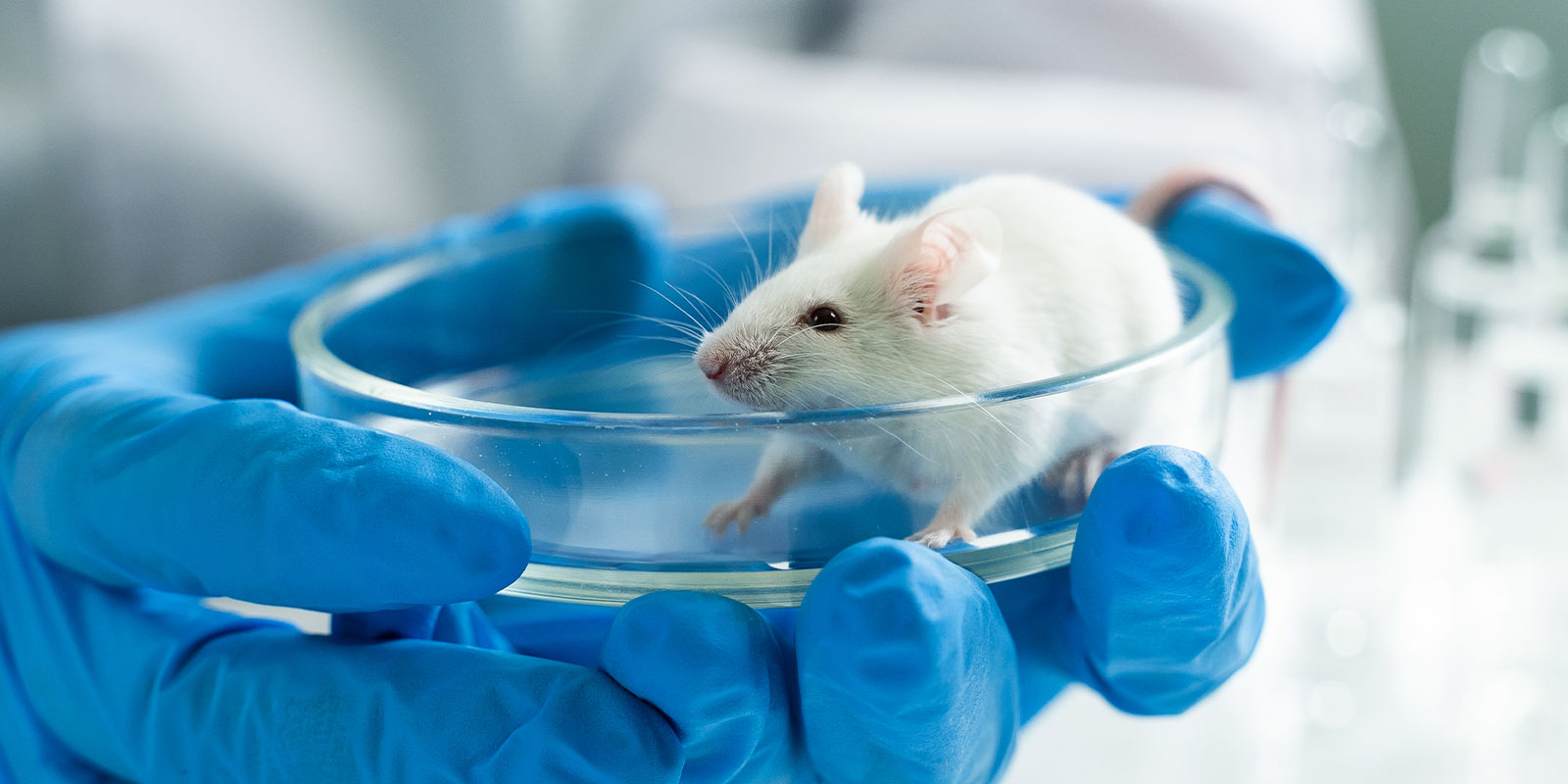
Research that explores the future
with respect for life
We can accommodate a wide range of laboratory animals, from rodents to larger animals such as dogs and pigs.
All animals are maintained under veterinary care in a clean, temperature- and humidity-controlled environment.
All animal studies are conducted in accordance with protocols approved by the Institutional Animal Care and Use Committee (IACUC).
Nissei BILIS CO., LTD. Animal Experiment Regulations
Chapter 1: General Provisions
(Purpose)
Article 1. These Regulations set forth the matters to be observed in the conduct of animal experimentation, etc. at the Shiga Research Institute of Nissei BILIS Corporation (hereinafter referred to as “the Company”), and establish the necessary provisions for conducting animal experiments appropriately from the standpoints of scientific validity, consideration for the welfare of laboratory animals, environmental conservation, and the safety of Company employees and other personnel.
(Fundamental Principles)
Article 2. In conducting animal experimentation, the Company shall act in accordance with the “Act on Welfare and Management of Animals,” the “Standards Relating to the Care and Management of Laboratory Animals and Relief of Pain,” the “Guidelines on Methods of Killing Animals,” the “Basic Guidelines for the Conduct of Animal Experiments in Research Institutions under the Jurisdiction of the Ministry of Health, Labour and Welfare,” and the “Guidelines for Proper Conduct of Animal Experiments,” Animal experimentation shall be conducted appropriately based on the 3Rs principle — Replacement (the use, to the extent that the scientific purpose can be achieved, of alternative methods that do not rely on live animals), Reduction (minimizing, to the extent that the scientific purpose can be achieved, the number of animals used while ensuring the appropriate utilization of laboratory animals), and Refinement (selecting, to the extent that the scientific purpose can be achieved, methods that cause the least possible pain to animals). These Regulations are established to ensure the appropriate operation of the Institutional Animal Care and Use Program (hereinafter the “Program”) — comprising the norms, procedures, standards, organizational structure, staffing, facilities, and practices (including animal husbandry and veterinary care, policies/regulations/procedures, oversight of personnel and activity plans, occupational health and safety, the functions of the Institutional Animal Care and Use Committee, and facility design and management) — aimed at achieving the humane care and use of animals.
(Definitions)
Article 3. The terms used in these Regulations shall have the following meanings. Where laws, guidelines, etc. refer to positions or terminology, such references shall be appropriately construed in accordance with the Company’s organizational structure.
(1) “Animal experimentation, etc.” means all acts in which laboratory animals are used for educational, research, or other scientific purposes.
(2) “Animal husbandry and holding facilities” means the facilities and equipment used for the ongoing rearing, housing, and conduct of animal experimentation involving laboratory animals.
(3) “Laboratory” means an animal experiment room in which experimental procedures are performed on laboratory animals.
(4) “Facilities” means animal husbandry and holding facilities as well as laboratories.
(5) “Laboratory animals” means all mammals, etc., used and kept by the Company.
(6) “Animal study protocol” means a plan for the conduct of animal experiment, etc.
(7) “Institutional Official” means the person who bears ultimate responsibility for animal experimentation and the rearing or housing of laboratory animals at the Company (this role is held by the Company’s “GLP Test Facility Management”).
(8) “Principal Investigator” means the person who oversees the conduct of animal experimentation and bears responsibility for the experimental work under an animal study protocol (this role is held by the Company’s “GLP Study Director”).
(9) “Animal Experimenter” means a person who conducts animal experimentation, etc. (this role is held by the Company’s “GLP Study Personnel”).
(10) “Animal Care Manager” means the person who, under the Institutional Official, is responsible for the care of laboratory animals and the management of facilities, possessing the requisite knowledge and experience in laboratory animal husbandry (this role is held by the Company’s “GLP Animal Care Manager”).
(11) “Animal Care Staff” means persons who, under the Animal Care Manager, the Principal Investigator, or Animal Experimenters, engage in the rearing or housing of laboratory animals.
(12) “Veterinary Care Director (hereinafter ‘Attending Veterinarian’)” means the veterinarian who assists the Institutional Official and bears responsibility for the health and well-being of all laboratory animals used by the Company. The Attending Veterinarian shall be appointed by the Institutional Official, and a deputy may be designated as necessary.
(13) “Veterinary Care Team” means the team that conducts rounds to check the condition of animals and the operational status of animal rooms. It shall be headed by the Attending Veterinarian and composed of the Animal Care Manager, veterinarians, and Certified First -Class Laboratory Animal Technicians, appointed by the Attending Veterinarian. Persons with extensive experience in laboratory animals may also be appointed as needed.
(14) “Standards, etc.” means the standards, guidelines, and directives established by administrative authorities, as well as guidelines issued by the Science Council of Japan, regarding animal experimentation, etc.
(Scope of Application)
Article 4. These Regulations apply to all experiments, etc. conducted at the Company that involve the use of live laboratory animals.
2. Where the Principal Investigator outsources the conduct of animal experiment, etc. to an external institution, the Principal Investigator shall confirm that the animal experiment is conducted at the contracted institution in accordance with these Regulations or applicable standards, etc.
Chapter 2: Responsibilities of the Institutional Official
(Responsibilities of the Institutional Official)
Article 5. The Institutional Official shall bear ultimate responsibility for the proper and safe conduct of animal experimentation and the Program at the Company, and shall take the measures prescribed in these Regulations as well as any other measures necessary for the proper conduct of animal experimentation. The Institutional Official shall also implement measures to prevent the escape of animals and take necessary action in the event of an escape. Furthermore, the Institutional Official shall have the authority to allocate the resources necessary to ensure the effectiveness of the Program, and shall be responsible for aligning the Program’s objectives with the Company’s mission.
(Establishment of Institutional Regulations)
Article 6. In order to comply with applicable standards, etc. and the Program, the Institutional Official shall establish institutional regulations and shall be responsible for reviewing and revising such regulations as appropriate in response to changes in laws, norms, and the social environment relating to animal experimentation.
(Establishment of the Institutional Animal Care and Use Committee)
Article 7. To ensure the proper conduct of animal experimentation, the Institutional Official shall establish an Institutional Animal Care and Use Committee (IACUC) to evaluate and oversee animal experimentation.
(Approval of Animal Experiment Protocols)
Article 8. Prior to the commencement of animal experiment, the Institutional Official shall require the Principal Investigator to submit an animal experiment protocol, and shall approve or reject the application following review by the IACUC.
(Review of Animal Experiment Results)
Article 9. With respect to completed animal experiments, the Institutional Official shall require the Principal Investigator to report to the IACUC, and shall receive the results as confirmed and reviewed by the IACUC Chair. Where a deviation from the protocol has occurred, the matter shall be reviewed by the IACUC, and the Institutional Official shall, as necessary, implement corrective measures to ensure the proper conduct of animal experiment.
(Provision of Education and Training)
Article 10. To ensure the proper conduct of animal experiment and the proper husbandry and care of animals, the Institutional Official shall provide opportunities for education and training to impart relevant knowledge and skills, and shall conduct regular training to improve the competency of personnel involved in animal experimentation and animal husbandry.
(Self-Inspection, Evaluation, and External Verification)
Article 11. The Institutional Official shall conduct periodic self-inspections as well as inspections and evaluations by external bodies to ensure that animal experimentation and the Program are being conducted properly and safely.
(Disclosure of Information Relating to Animal Experimentation)
Article 12. The Institutional Official shall disclose, by appropriate means, information relating to institutional regulations and the results of external verification.
(Delegation of the Institutional Official’s Duties)
Article 13. Delegation of the duties of the Institutional Official shall be governed by the applicable Standard Operating Procedure (hereinafter “SOP”).
Chapter 3: Responsibilities of the Attending Veterinarian
(Responsibilities of the Attending Veterinarian)
Article 14. The Attending Veterinarian shall bear responsibility for the veterinary care of all animals kept by the Company and shall oversee veterinary care for the health and well-being of the animals, and shall report on such care to the Institutional Official at least once per year.
Chapter 4: Responsibilities of the Principal Investigator
(Development of Animal Experiment Protocols)
Article 15. Prior to conducting animal experiment, the Principal Investigator shall develop an animal experiment protocol and obtain the approval of the Institutional Official.
(Reporting of Protocol Results)
Article 16. Upon the completion of animal experiment, the Principal Investigator shall report the results of the animal experiment protocol to the Institutional Official.
Chapter 5: Institutional Animal Care and Use Committee
(Role of the IACUC)
Article 17. The IACUC, upon consultation from the Institutional Official, shall review whether animal experiment protocols and reports comply with relevant laws, standards, etc., and institutional regulations, and shall report the results to the Institutional Official.
2. The organization and operation of the IACUC (including evaluation, education, and oversight) shall be governed separately by the “Nissei BILIS Corporation IACUC Regulations.”
Chapter 6: Conduct of Animal Experiment
(Planning, Review, and Reporting of Animal Experiment Protocols)
Article 18. To ensure scientific validity and the reliability of data obtained through animal experiment, the Principal Investigator shall develop an animal experiment protocol taking into account the following matters, and shall submit the protocol, in the prescribed form, to the Institutional Official:
(1) The purpose of the animal experiment, etc.;
(2) Appropriate use of laboratory animals with consideration of alternative methods;
(3) Selection of the laboratory animal species suited to the purpose of the animal experiment, etc., to reduce the number of laboratory animals considering the precision and reproducibility of the animal experiment results, and the genetic and microbiological quality as well as and the husbandry conditions;
(4) Selection of experimental and treatment methods, considering the reduction of pain;
(5) For experiments involving a high degree of pain (e.g., lethal toxicity studies, infection studies, disease model studies), establishment of humane endpoints (the point at which the experiment is terminated to relieve the animal from severe pain) at the protocol planning stage;
(6) Where multiple surgical procedures are to be performed, measures to ensure scientific validity while minimizing the impact on animal welfare;
(7) Scientific justification for the use of non-pharmaceutical-grade compounds (reagents).2.Upon receipt of an animal experiment protocol from the Principal Investigator, the Institutional Official shall refer it to the IACUC for review and shall determine whether to approve it based on the IACUC’s findings or recommendations, and shall notify the Principal Investigator of the outcome.
3.The Principal Investigator may not conduct animal experiment until approval has been obtained from the Institutional Official.
4.Upon completion or discontinuation of an approved animal experiment protocol, the Principal Investigator shall submit an animal experiment report, in the prescribed form, to the Institutional Official following review by the IACUC.
5.Where the Principal Investigator wishes to amend an approved animal experiment protocol, the Principal Investigator shall apply for approval of the relevant amendment, in the prescribed form, to the Institutional Official.
(Conduct of Procedures in Animal Experiment)
Article 19. In conducting animal experiment, Animal Experimenters shall comply with relevant laws and standards, etc., and shall observe the following:
(1) Animal experiment shall be conducted in properly maintained facilities;
(2) The following matters, along with the matters stated in the animal experiment protocol, shall be observed:
(a) Use of appropriate anesthetics, analgesics, etc.;
(b) Appropriate consideration of the timing for ending the experiment (including humane endpoints);
(c) Appropriate postoperative care;
(d) Selection of an appropriate method of euthanasia;
(3) For experiments requiring particular attention to safety management (e.g., those involving physically or chemically hazardous materials, pathogens, or genetically modified animals), appropriate facilities and equipment shall be secured for safety in accordance with relevant laws, standards, etc., and Company regulations;
(4) Ensure appropriate safety facilities and equipment for animal experiment involving physically or chemically hazardous materials or pathogens, etc.
(5) Personnel shall have received the necessary training and acquired the requisite knowledge and techniques for experiments involving surgical procedures, administration, blood collection, and similar procedures.
Chapter 7: Facilities
(Animal Husbandry and Holding Facilities)
Article 20. Animal husbandry and holding facilities shall satisfy the following requirements:
(1) The structure shall be capable of maintaining appropriate temperature, humidity, ventilation, and lighting, etc.;
(2) The facility shall have husbandry equipment suited to the species and number of animals housed;
(3) Floors and interior walls shall be of a structure that facilitates cleaning and disinfection, and the facility shall have sanitary equipment for the washing and disinfection of materials;
(4) The facility shall have a structure and strength sufficient to prevent the escape of laboratory animals;
(5) Locking devices, etc. shall be installed to restrict access by persons not directly involved in animal husbandry;
(6) Measures shall be taken to prevent adverse effects on the surrounding environment caused by odor, noise, waste, etc.;
(7) The Animal Care Manager shall take measures, including the use of repellents, to prevent the intrusion of insects into the facility.
(Laboratories)
Article 21. Laboratories shall satisfy the following requirements:
(1) The structure and strength shall prevent the escape of laboratory animals, and the environment shall be maintained such that any animal that escapes within the room can be easily recaptured;
(2) The structure shall facilitate cleaning and disinfection in the event of contamination by excreta, blood, etc.;
(3) A clean state shall be maintained at all times, and measures shall be taken to prevent adverse effects on the surrounding environment caused by odor, noise, waste, etc.
(Maintenance and Improvement of Facilities)
Article 22. The Animal Care Manager shall strive to maintain and improve the facilities necessary for the proper management of laboratory animals and the conduct of animal experiment.
2. Where the IACUC receives a report of a deviation relating to animal welfare, it shall report the matter to the Institutional Official, who shall order the responsible manager of the relevant department to take corrective action.
Chapter 8: Husbandry and Care of Laboratory Animals
(Veterinary Care)
Article 23. The Attending Veterinarian shall oversee the Veterinary Care Team for the health and well-being of all animals kept by Nissei BILIS CO., LTD., shall conduct rounds of all animal husbandry and holding facilities once every six months, and shall report to the Institutional Official.
Article 24. The Animal Care Manager, Animal Experimenters, and Animal Care Staff shall provide the necessary health management for laboratory animals to prevent injury or illness unrelated to the purpose of the experiment.
Article 25. Upon discovery of an abnormal animal, the animal shall be treated in accordance with the applicable SOP.
(Development and Dissemination of Husbandry Procedures)
Article 26. The Institutional Official and the Animal Care Manager shall establish husbandry procedures and ensure that they are disseminated to Animal Experimenters and Animal Care Staff.
(Introduction of Laboratory Animals)
Article 27. The Principal Investigator and the Animal Care Manager shall introduce laboratory animals from institutions that manage animals appropriately in accordance with applicable standards, etc.
2. The Principal Investigator and the Animal Care Manager shall carry out appropriate quarantine and acclimation procedures upon the introduction of laboratory animals.
3. The Principal Investigator and the Animal Care Manager shall take the necessary measures to facilitate the acclimation of laboratory animals to their husbandry environment.
(Feeding and Watering)
Article 28. The Animal Care Manager, Animal Experimenters, and Animal Care Staff shall provide appropriate feeding and watering in accordance with the physiology, ecology, and habits of the laboratory animals.
(Housing of Different Species or Multiple Animals)
Article 29. Where laboratory animals of different species are housed within the same facility, individually ventilated cages shall be used. Social animals shall, in principle, be housed in groups or pairs, except where this would affect the evaluation of the study; provided, however, that this shall not apply where housing animals together would pose a risk to their physical safety or life.
(Preservation of Records and Reporting)
Article 30. Animal Experimenters shall maintain and preserve records concerning the source of laboratory animals, their husbandry history, and medical history, etc.
(Provision of Information upon Transfer)
Article 31. When transferring laboratory animals to an institution outside the Company, the Animal Care Manager shall provide information concerning the animals’ characteristics, methods of husbandry and care, and infectious diseases, etc.
(Transport)
Article 32. When transporting laboratory animals (including where transport is outsourced to a third party), the Animal Care Manager shall give due consideration to the following matters to ensure the health and safety of the animals and prevent harm to persons:
(1) Methods that allow for the shortest possible transport time shall be used to minimize fatigue and distress to the animals;
(2) Appropriate feeding and watering shall be provided during transport as necessary, and efforts shall be made to maintain appropriate temperature, humidity, and ventilation in containers and vehicles;
(3) Containers and vehicles shall be of a size and structure sufficient to ensure the health and safety of the animals and to prevent their escape, with consideration given to their physiology, ecology, and habits;
(4) Necessary measures shall be taken to prevent environmental contamination caused by microorganisms carried by the animals and the waste of animals.
Chapter 9: Adverse Events
(Reporting and Response)
Article 33. In the event of an unexpected death, a significant increase in pain or distress, abnormal behavior, or other unanticipated adverse effects on animal welfare occurring during animal experiment, or where unexpected results may potentially affect animal welfare, the matter shall be handled in accordance with the attached “Manual for the Assessment and Reporting of Adverse Events.”
Chapter 10: Safety Management
(Prevention of Harm)
Article 34. The Institutional Official shall establish, in advance, methods for the capture of escaped laboratory animals.
2. In the event that laboratory animals that may pose a risk of harm to persons escape outside the facility, the Institutional Official shall promptly notify the relevant authorities.
3. The Institutional Official shall implement preventive measures and necessary responses in the event of infectious disease transmitted by laboratory animals or the risk of animal bites, for the Animal Care Manager, Animal Experimenters, and Animal Care Staff.
4. The Institutional Official shall take the necessary measures to prevent contact with laboratory animals by persons not involved in their husbandry or in animal experimentation.
(Emergency Response)
Article 35. The Institutional Official shall develop, in advance, a plan of measures to be taken in the event of an emergency such as an earthquake or fire, and shall ensure that relevant personnel are made aware of the plan.
2. In the event of an emergency, the Institutional Official shall endeavor to protect laboratory animals and prevent harm resulting from their escape.
Chapter 11: Education and Training
(Education and Training)
Article 36. Persons assuming the role of Animal Experimenter, Animal Care Manager, or Animal Care Staff shall, prior to assuming such role, receive the necessary education and training on the following matters. Records of such training shall be maintained in accordance with the applicable SOP:
(1) Matters relating to relevant laws and standards, etc.;
(2) Basic matters relating to methods of animal experimentation;
(3) Indicators of pain based on species-specific behavioral signs;
(4) Basic matters relating to the husbandry and care of laboratory animals;
(5) Matters relating to safety assurance and safety management;
(6) Matters relating to zoonotic diseases;
(7) Other matters relating to the proper conduct of animal experimentation.
2. Persons conducting animal experimentation shall receive education on humane endpoints and euthanasia procedures. In addition, persons performing surgical procedures shall, prior to doing so, receive appropriate training in sound surgical technique as well as anesthesia and analgesia. Procedures such as administration and blood collection shall likewise be performed only by persons who have acquired the necessary technical skills.
3. Persons assuming the role of Animal Experimenter, Animal Care Manager, or Animal Care Staff shall receive appropriate education once per year, for the purpose of improving their competency with respect to relevant laws and the latest standards relating to animal health and well-being.
4. Members of the IACUC shall receive education once per year on the latest regulations, ethical standards, and animal welfare practices.
Chapter 12: Self-Inspection, Evaluation, and External Verification
(Self-Inspection, Evaluation, and External Verification)
Article 37. The IACUC shall conduct self-inspection and evaluation, as well as periodic external verification, of the status of animal experimentation as set forth in the following items, and shall report the results to the Institutional Official:
(1) Review of IACUC Program Activities
The IACUC shall conduct a self-evaluation once per year, and shall undergo periodic verification by an external review body, regarding committee composition, meeting frequency, protocol review status, and implementation of corrective measures, etc.
(2) Facility Inspection
The IACUC shall conduct an inspection once per year regarding the housing environment (cages, enrichment, density), environmental management (temperature, humidity, ventilation, lighting, etc.), condition of equipment (laboratories, cleanliness, etc.), emergency response (evacuation plans, inspection of backup equipment), and occupational safety (safety patrols), etc.
(3) Re-Review of Protocols and Inspection of Experimental Procedures
The IACUC shall conduct an inspection once every six months to re-review whether ongoing protocols are being carried out in accordance with the approved content, and to assess the status of surgical procedures, use of analgesics/anesthetics, occupational health and safety, training, and recordkeeping.
Chapter 13: Information Disclosure
(Information Disclosure)
Article 38. The Company shall publicly disclose information relating to its animal experimentation approximately once per year.
Chapter 14: Miscellaneous Provisions
(Experiments Involving Pathogens and Genetically Modified Animals)
Article 39. Among the animal experiments conducted by the Company, those involving pathogens shall be governed by the Biosafety Management Regulations.
2. Experiments involving genetically modified animals shall be governed by the Genetic Modification Experiment Safety Management Regulations.
(Amendment and Abolition)
Article 40. These Regulations shall be amended or abolished by the Institutional Official following deliberation by the IACUC.
(Document Retention)
Article 41. All documents relating to animal experimentation shall be retained in PDF format. The retention period for original paper documents shall be three years.
2. Records shall be retained to the extent reasonably possible, including those relating to amendments or abolition of regulations and the designation of deputies.